
A cockroach can eat quite well in a kitchen where every loaf is wrapped and every jar is closed. The grain of rice under the cooker, the smear of grease beside the stove, and the last drops in a soda can are all accessible meals. In a forest, another cockroach might spend its night carrying a fallen eucalyptus leaf underground or grazing tiny plants growing on a much larger leaf.
What do cockroaches eat in a house?
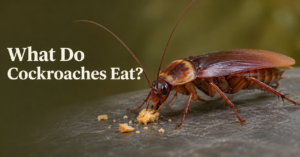
Common household cockroaches eat starchy crumbs, sugar, grease, meat scraps, pet food, and ripe fruit. They also sip drinks such as milk, soda, and beer. Food does not have to be rotten. A fresh crumb is ready to eat, while a sealed bag of the same food may offer shelter on its outside without offering a meal inside.
Many cockroaches are omnivorous scavengers, but individual species have narrower habits. The 80 foods below include household residues, wild resources, captive foods, and unusual meals taken only at particular life stages. For a recurring kitchen sighting, begin with the accessible residue nearest the insect and check water and shelter separately.
| Where you saw the roach | Food worth checking | What else could explain the sighting? |
|---|---|---|
| Under a toaster | Crumbs in the tray or beneath the appliance | A narrow undisturbed gap |
| Next to a pet bowl | Broken kibble under the mat | Spilled drinking water |
| In the recycling bin | Milk or sweet drink left in a container | Cover inside a carton or bottle carrier |
| By a sink | Food caught in the strainer | A leak or an opening around a pipe |
| Inside a cardboard box | Food adhering to a flap or seam | Shelter between layers or transport with the box |
| On a garden leaf | Pollen, honeydew, or surface growth in species known to use them | A perch, cover, or a route to another plant |
80 foods cockroaches eat, and where each meal happens
Items 1–30 cover kitchen food, pet food, and drinks. Items 31–52 follow cockroaches into produce, captive diets, stored seeds, and growing crops. Items 53–73 cover forest, cave, and animal foods. Items 74–80 explain unexpected materials in buildings and two specialized secretions.
1. Bread crumbs
A slice of bread is a large object to a cockroach. The crumbs that fall from it are a more realistic picture of what the insect finds in a kitchen. German and American cockroaches can chew the starch-rich interior, including fragments small enough to collect in a toaster tray or the gap between a cutting board and the wall. A loaf can be securely wrapped while yesterday’s toast is still providing accessible food elsewhere.
Texture changes the feeding opportunity. A soft crumb has exposed surfaces that the mouthparts can work immediately. A dry crust may persist longer and break into smaller particles when someone moves the toaster. Neither observation requires a cockroach to eat its way through an intact plastic bag. When bread seems to attract activity, check where it was sliced, served, and carried as well as where it is stored.
For a household inspection, the most informative question is what stays behind after the bread goes away. Empty the cooled appliance’s removable crumb tray as directed, wipe accessible surfaces, and check the shelf underneath the bread bin. An insect seen on the counter establishes activity there, but rarely identifies the exact meal. Food removal is most effective when paired with attention to moisture and hiding places.
2. Cooked rice
An individual grain of cooked rice contains starch and moisture in the same small package. American cockroaches have been recorded eating leftover rice, and a grain dropped behind a cooker can remain accessible after the pot and plates have been washed. A sticky clump can also adhere to the underside of a serving spoon, the outer rim of a container, or the floor beneath a dining chair.
Rice changes rapidly after serving. It dries at the edges, sticks to other residues, and can eventually spoil. A cockroach feeding on an old grain may therefore obtain material quite different from fresh, plain rice. A visitor on a rice pot could also be investigating moisture on the lid. The clearest evidence for rice consumption is a sustained feeding movement at the grain itself, not the insect’s presence beside a familiar food.
In a home that cooks rice daily, repeated small losses may matter more than one dramatic spill. Include the serving station and the rice cooker’s removable parts in ordinary cleaning, following the appliance instructions. Refrigerate leftovers promptly and keep the storage container closed. A clean dry grain bin addresses a different source from cooked rice lodged beneath a counter appliance. Treating the two as distinct locations is more effective than assuming an insect must have entered the unopened bag.
3. Wheat flour
Flour dust can feed a scavenging cockroach without leaving recognizable bite marks. It settles along the folds of a paper sack, under a kitchen scale, and in the narrow strip where a pantry shelf meets the wall. A person judges the amount against a cupful needed for baking. An insect encounters numerous small particles ready to pick up with its mouthparts. The different scales explain why a pantry can look almost empty of food and still offer some.
A roach running out of a flour cupboard is evidence of access to that space. It does not identify the insect that made holes in a package or prove the flour itself was the main attraction. Other stored-food insects can occur in flour, and a warm cabinet may also provide shelter. Identify what is present rather than attributing every sign in the cupboard to the first moving insect you notice.
A tight food-grade container helps protect the bulk of a flour supply. Cleaning the container’s outside and the shelf addresses the dust that sealing it cannot remove. Check scoops and the lip where the lid meets the container. If the contents show obvious insect contamination, discard the affected food and clean the storage area before restocking. Adding fresh flour to an unexamined old container can conceal the original problem.
4. Rolled oats
Rolled oats are a plausible grain food for household cockroaches because the grain has been flattened into flakes with exposed edges. The relevant food may be an ordinary flake dropped from a cereal box, a little oat dust, or a trace of cooked oatmeal left on the side of a bowl. These forms all originate in the same cereal, so counting them as independent dietary preferences would exaggerate the variety involved.
Dry oats can collect beneath a breakfast tray while moist oatmeal adheres to utensils. The two locations remain usable for different lengths of time and demand different kinds of cleaning. A sweep can remove loose flakes but leave a cooked smear. A wiped countertop can look spotless while dry oats remain under the edge of a placemat. Start with the actual route the food follows through preparation, eating, and washing.
In captive insect care, commercially prepared dry foods may also contain oats or other cereals. A roach eating one oat flake provides no evidence that plain oats alone make a complete ration for the species. In a pantry, the converse is useful: you do not need to prove that oats are a favorite before removing loose food and protecting the package. Availability can explain a feeding opportunity without any claim about an insect’s first choice.
5. Cornmeal
Cornmeal consists of ground maize, an accessible starchy food among the grain products a household cockroach can exploit. Depending on the grind, particles may be scarcely visible or large enough to feel gritty beneath a cloth. A small pour beside a bag can spread farther than the visible yellow center of the spill. Under shelf liners or at the foot of a cabinet, those grains can remain undisturbed after the main surface is clean.
The name also covers products whose composition differs substantially. Plain cornmeal contains ground grain, whereas a prepared baking mix may add sugar, fat, or other ingredients. A cockroach visiting a spill of the mixed product may be consuming several resources at once. Observing feeding tells you which product was accessible; it does not isolate which ingredient guided the animal’s choice. This is a recurring distinction in interpreting kitchen food preferences.
For a flour or cornmeal cupboard, pay attention to what happens when a bag is lifted. Dust underneath a standing bag often remains invisible until the bag moves. Transfer sound food to a container with a close-fitting lid, and clean the old storage spot rather than simply returning the new container to it. A grain at the cabinet edge is already accessible regardless of how well the remaining supply is sealed.
6. Dry pasta fragments
Dried pasta is a grain product, commonly made from wheat. A broken elbow or sliver of spaghetti exposes a starchy surface that an omnivorous pest cockroach can investigate and nibble. It presents a different physical problem from soft cooked noodles, but both are forms of pasta. The fact that a roach can consume a fragment does not establish that it can readily open an intact package or that it prefers pasta to other foods.
Consider the kitchen cupboard where boxes are repeatedly tilted over a pot. Tiny pieces and dust can fall from the partly open end, collect under the box, or slide to the back of a drawer. The amount lost at one meal may never register to the person cooking. Over time the result can be a persistent food deposit adjacent to cardboard folds that also provide cover. The food and the hiding place have separate roles.
Inspection is therefore most informative after removing the packages and looking at the bare shelf. Discard visibly contaminated food, clean loose fragments, and use sound closed containers for the remaining stock. If insects continue to appear after the cupboard is clean, consider neighboring water sources or sheltered gaps. A cockroach passing through the pasta drawer may have eaten somewhere else and chosen the drawer for another reason.
7. Sweet biscuits
A broken sweet biscuit provides starch, sugar, and often fat within a single crumb. German cockroaches have consumed biscuit in food-choice trials, making this a better-grounded example than assuming that every sweet smell is equally attractive. The observation concerns the food as offered. Changing the biscuit recipe or comparing it against a different set of alternatives could change the apparent preference. A result for one group of insects need not describe every kitchen.
Biscuits are particularly likely to turn up away from food preparation areas. A person may carry one to a desk, sofa, bedside table, or car. The empty plate comes back to the kitchen, but crumbs stay in keyboard trays, cushion seams, or a drawer where an open sleeve was kept. A cockroach sighting in a room without a sink is therefore consistent with occasional feeding, even though the insect may obtain water elsewhere.
Use an ordinary evening snack as a guide to the places worth checking. Lift the mat or movable tray rather than just wiping around it, and empty crumbs from the container before refilling it. Nothing about this food requires leaving a biscuit out as a test. Looking for residues and mapping where insects already appear gives a clearer picture without creating an additional food source.
8. Table sugar
Cockroaches can take sucrose, the familiar sugar in a kitchen canister. A spill beside a coffee maker can leave dry crystals, while the same sugar dissolved in droplets forms a film that is much harder to see. Either can provide carbohydrate. What a person experiences as an empty sugar packet may still contain grains trapped in the paper fold or stuck to the tear at the top.
The phrase “cockroaches love sugar” needs qualification. Species and individuals differ, and the specific sugar matters. Some German cockroach populations show an aversive taste response to glucose. Sucrose, glucose, and a sweet prepared food containing several ingredients are not equivalent tests. An insect refusing one sugary product can still eat other carbohydrate sources. Likewise, finding one at a sugar bowl cannot show that sugar alone is sustaining it.
At home, check the saucer underneath the canister and the tray carrying mugs, spoons, and sweeteners. Wiping the visible crystals off a counter may leave sticky water on the underside of the tray. Clean washable surfaces and store sugar in a well-sealed container. Sweetened coffee drips may require attention separately from the bulk supply. Reducing both forms is more informative than searching for one supposedly irresistible substance in the house.
9. Chocolate
Chocolate is among the foods pest cockroaches can nibble. A confection usually combines fat and sugar with cocoa solids, so a sighting does not show which component the animal detected first. A shaving of chocolate in the fold of a wrapper is a complete feeding opportunity at an insect’s scale. The bar may already have been eaten or returned to a sealed container when that small residue becomes accessible.
Temperature changes where the residue ends up. A firm square can break into flakes; warmed chocolate can smear along drawer edges or transfer to the underside of a plate. The same amount can become spread across a much larger surface. A roach found on the outside of a chocolate package may also be using nearby cardboard as cover, and its position alone cannot prove that it penetrated a sealed bar.
At a snack drawer or concession stand, check the surfaces touched by hands and the bin where wrappers wait for disposal. Clean smears and remove discarded packaging as well as protecting intact stock. The ability of cockroaches to use chocolate does not mean that it should be offered to animals on display or used to diagnose an infestation. In most homes the actionable detail is the accessible residue, whether anyone saw an insect actually feeding on it or not.
10. Hard candy residue
A piece of hard candy might look too solid for an insect to use, but its surface can become sticky as moisture collects on it. A wrapper, a partly eaten sweet, or a sugary patch left where one melted can give a cockroach access to dissolved material. The feeding opportunity changes with the physical state of the confection. It need not involve a cockroach biting through a whole hard sweet.
Candy is also portable. A single piece might spend time in a bag, a vehicle cup holder, or a jacket pocket before the wrapper ends up in a bedroom wastebasket. These locations can retain residues after the kitchen has been cleaned. Looking only at a sugar canister would miss them. Follow the trail of the product through the places where it is eaten and discarded, particularly if insect activity is concentrated in one of those rooms.
Hard candy is an example of a mixed human product rather than a distinct nutrient requirement. Flavoring, coating, and the particular sugars used vary, and sugar-free products should not be treated as identical. A cockroach beside a wrapper may simply be sheltered under it. Removing the wrapper and cleaning the sticky site addresses both possibilities without making assumptions about the species’ preferences or introducing another sweet to see whether the insect returns.
11. Cake crumbs
Cake leaves a crumb with a different structure from a hard candy or a plain bread crust. Its porous interior can carry sugar and fat together, and frosting may add a moist layer. Pest cockroaches can use pastry and baked sweet residues. The piece that matters is often the one that fell from the serving knife onto the underside of a cake stand, where it may persist after the visible cake has been put away.
Celebrations can distribute food over a wider area than a routine meal. The kitchen, a serving table, the floor beneath chairs, and the bin containing paper plates may each receive a little. If roaches appear near the event area later, they may have encountered one or several of these deposits. An isolated sighting does not establish that a cake introduced insects into the building or that they have a special preference for its flavor.
For cleanup, disassemble washable stands and trays as intended and check the seam where the lid fits. Remove food-soiled paper goods and clean the surrounding floor. A closed cake box helps protect its contents, but paper folds and a loose cover should not be mistaken for insect-proof long-term storage. The practical issue is the combination of a dispersed food and several sheltered locations, not the precise recipe that was served.
12. Cooking grease
A cooled line of grease beside a stove can provide food even when there are no visible crumbs. Cockroaches can feed on greasy residues, which often contain both fats and tiny food solids. A thin film behaves differently from a loose grain. It adheres to the underside of a range lip, the side of a pan, or a container holding cooking utensils. Sweeping the floor removes very little of it.
Heat, moisture, shelter, and food may overlap near cooking equipment. A cockroach at the base of the stove may be feeding, traveling along an edge, or using a nearby gap as a retreat. That ambiguity is a reason to inspect several factors, not to assume that the insect lives on grease alone. Likewise, the presence of a film need not produce a conspicuous bite mark. A visually unchanged surface can still have offered repeated small meals.
Clean grease from accessible surfaces according to the appliance instructions, including cool removable parts and safe-to-reach sides. Avoid moving heavy or connected equipment unsafely; professional cleaning or maintenance may be appropriate for inaccessible areas. Alongside that work, address food storage, leaks, and recurring insect activity. A grease-free stovetop is worthwhile, but clean burners alone do little about a film on the underside of a neighboring counter or an undetected water source.
13. Peanuts
Peanuts occur in American cockroach feeding records and in food-choice work with German cockroaches. They provide both fat and protein, enclosed in a kernel that readily breaks into smaller pieces. A fragment on the floor can therefore represent a different kind of meal from a sugar crystal nearby. Calling the insect an omnivore is useful here: it can draw on several nutrient sources rather than being restricted to sweet food.
A whole nut, a split kernel, and a powder left after handling are the same basic ingredient at different scales. The powder may disappear from view beneath a storage shelf while still being accessible to an insect. A peanut paste also has a different texture, and commercial preparations can include oil, sugar, or salt. A feeding result for one form should not be presented as evidence of an unconditional preference for every peanut product.
Check the places where nuts are shelled, chopped, or portioned, not just the container holding the supply. A chopping board can scatter fragments farther than the original pile suggests. Clean dry particles and any oily smear, then protect sound food in a close-fitting container. A little nut dust in a drawer does not identify an infestation by itself, but it is a plausible food source worth removing if cockroaches are present.
14. Walnut kernels
Crushed walnut has been included among the protein- and fat-containing foods examined in American cockroach feeding comparisons. The edible kernel is relevant here, not the hard outer shell. Finding an insect beneath a pile of shells could mean it was using shelter or taking scraps still attached to them. A clear observation at the exposed kernel is much better evidence of the actual feeding interaction.
Walnuts often enter a kitchen as broken halves for baking. Tipping the bag into a measuring cup leaves dust, and a chopping blade can move fine fragments into a board groove or drawer. Those fragments can support an opportunistic feeder without any recognizable bite on an intact nut. An owner may consequently see cockroaches near a nut cupboard while every obvious kernel looks untouched. Small residues and access routes are worth examining before assuming the roaches have opened sealed containers.
Walnuts are one possible item among many, and a laboratory choice among a few foods cannot rank them against everything an insect encounters in a building. Protect the kernels, remove fragments where they are prepared, and check the rubbish container containing baking paper or discarded shells. The situation usually becomes easier to interpret when the food, the packaging, and the sheltered space are considered separately rather than all being called a single attractant.
15. Cooked potatoes
German cockroaches can eat potato, a starchy tuber used in comparisons of household foods. A small piece of cooked flesh is softer and wetter than a sound whole potato in storage. Those properties affect access as well as nutrition. A cockroach on a basket of potatoes may be sheltering between them, whereas one working its mouthparts along a cooked fragment has encountered an obvious food surface.
The preparation route often matters more than the produce bin. Peeling, draining, mashing, and serving can leave fragments in a colander, on a sink strainer, or on a cloth near the stove. A plate scraped into the bin still leaves some potato in corners and ridges. Its pale color can make a small smear almost invisible on a light countertop, especially after drying. What remains available to the insect can outlast the meal people remember eating.
Distinguish plain potato from potato dishes that contain butter, cheese, meat, or sauce. A roach taking a bite from a casserole need not be responding chiefly to potato, even though it is the largest ingredient. Store prepared food appropriately and clean the tools and surfaces it contacted. For a household trying to understand a sighting, locating these small deposits is more useful than assigning the entire event to a precise flavor preference.
16. Pork scraps
Pork has been offered alongside other foods in German cockroach choice studies. It represents an animal food containing protein and, depending on the cut, fat. Neither needs to be present as a large piece of meat for a scavenging insect to obtain a meal. A shred left on a serving fork, the corner of a cutting board, or the fold of discarded wrapping may be enough for feeding to occur.
The word pork does not specify what was actually available. A lean cooked fragment, a fatty piece, and drippings from seasoned meat differ in texture and composition. A cockroach feeding in the vicinity of pork might be using the solid tissue or a residue containing several foods from the same plate. A choice made in a controlled comparison does not reveal what a particular insect selected in a crowded kitchen.
The practical response follows the handling route. Put meat away appropriately, remove scraps from tools and work surfaces, and check waste storage for packages that still contain residue. A sealed refrigerator protects the roast but does nothing to remove material on the outside of a bin. When food is no longer available at a previously busy spot, continuing activity may reflect nearby shelter or water. It need not mean that the meat was irrelevant or that another large food source is present.
17. Ground beef
Ground beef illustrates why finely divided animal food can leave so many small feeding opportunities. Pest cockroaches consume meat, and a single cooked fleck can contain tissue and fat in a form accessible to their chewing mouthparts. After a meal, tiny fragments may remain in a pan rim, colander mesh, or drain strainer even when no visible serving of beef is left. The animal does not have to find an uncovered steak.
Browning meat distributes material differently from slicing a roast. Fat can spread into a thin film while solid particles remain behind. An insect at one location may be feeding chiefly on grease; another can take a fragment of tissue close by. It would be difficult to call either one a preference for beef over other meats without observing a choice between comparable foods. What the kitchen clearly provides is access.
For ordinary cleaning, deal separately with solid fragments and fatty deposits. Empty the strainer, wash washable surfaces, and dispose of cooking fat appropriately instead of washing it down a drain. Inspect the surrounding shelf or cupboard for leaks and shelter if roaches repeatedly appear there. The important dietary fact is that omnivorous cockroaches can use animal tissue along with starchy food, so removing bread crumbs alone leaves part of the available menu in place.
18. Fish flesh
American cockroaches have been observed eating fish. A piece of flesh left on skin, a flake on a serving plate, or a scrap adhering to a wrapper can all present edible tissue. This does not make the insect an aquatic predator. The documented meal is consistent with scavenging material already accessible on land or in a building, just as an outdoor roach might encounter organic remains without having killed the original animal.
Fish also makes the relationship between smell and nutrition easy to misunderstand. Odor may be noticeable to a person long after the visible meal is removed. An odor by itself tells you little about the amount of edible material or which insect will follow it. A smear too small to notice can provide food, while a sealed container can produce a noticeable smell in the vicinity without giving a roach direct access to the contents.
Pay particular attention to where fish was cleaned, drained, or discarded. Wash the cutting surface and remove debris captured in the sink strainer. Keep waste covered and avoid letting unwashed containers accumulate in a recycling bin. These measures address actual material rather than trying to mask an odor. If a roach is seen by a drain after the fish scraps are gone, inspect the damp site independently of what was served for dinner.
19. Chicken liver
Chicken liver has appeared in German cockroach food comparisons, including in powdered form. The insects’ response to it has sometimes been weaker than their response to particular carbohydrate-rich foods offered at the same time. That is a useful corrective to the assumption that a strong-smelling product must be a universal favorite. Detecting an odor, approaching it, and consuming a measurable amount are different behaviors, and available alternatives change the result.
Liver represents organ tissue rather than the muscle meat typically pictured in a kitchen scrap. Dry powder, fresh tissue, and cooked pieces have different moisture levels and surfaces. A feeding result for powder therefore does not supply an exact prediction about a fresh smear on a board. Equally, finding a roach near a pet food containing liver cannot identify liver as the ingredient it sought. The mixture may contain fat, cereal, or other animal products.
In a household, the relevant point is that even animal-derived ingredients incorporated into a dry product can remain edible when spilled. Inspect scoops, packet folds, and the area where a pet meal is prepared. Clean the whole handling area rather than looking only for a conspicuous piece of liver. The diet record explains a possible opportunity; it is unnecessary to add liver to the environment to see whether resident insects will accept it.
20. Egg yolk
Egg yolk contains fat and protein and can be investigated or eaten by opportunistic cockroaches when accessible. In a kitchen the most likely encounter is with exposed material from a cooked egg or food preparation. A roach on an egg carton may simply be tucked into the packaging. That sighting does not demonstrate that it can breach an intact hen’s egg or that the yolk inside was available to it.
The physical condition of the yolk changes where remnants collect. A firm cooked yolk crumbles into fine particles when sliced. A runny yolk spreads as a film and can adhere to the rim of a plate or container. A photograph showing a cockroach beside a yellow smear cannot always distinguish egg from a sauce containing it, so describe the evidence modestly. The wider biological conclusion is the insect’s ability to consume accessible animal-derived material.
Clean egg-preparation tools and surfaces promptly and dispose of shells bearing residual tissue. The shell itself is mostly mineral and should not be mistaken for the same food as what clings to its interior. An empty carton is better understood first as possible cover or packaging. Keeping the container, the shell, and the edible residue distinct helps explain why removing a carton might improve storage hygiene without proving that an intact egg had ever been a meal.
21. Cheese
Cheese is a documented food for pest cockroaches. A shaving that falls when a block is grated presents a surface much larger, relative to its mass, than the intact block. Along a board groove or beneath a refrigerator drawer, that fragment can supply protein and fat after the main food has been returned to cold storage. At insect scale the forgotten shaving matters more than the size of the cheese wheel it came from.
Cheese is also an example of why food names alone cannot predict feeding behavior. A firm, dry piece, a soft fresh cheese, and a processed spread have different moisture contents and textures. Comparative trials describe particular products under the conditions in which they were offered. They cannot establish that all cockroach species rank cheese above or below sugar, nor that cheese is needed by an animal living mainly in forest litter.
Check the places where cheese is grated, melted, and cleared from plates. A grater can retain fragments at the base, a baking tray can carry hardened patches, and the lip of a bin may catch a piece scraped from a dish. Removing these small sources complements sealing sound food. If a container is visibly contaminated, deal with the affected contents rather than assuming that washing its exterior is sufficient.
22. Milk
A few drops of milk left in a cup or bottle can supply liquid and nutrients to a scavenging cockroach. Unlike a grain or biscuit crumb, milk can spread through a seam and dry into a thin residue with little obvious change in the surrounding surface. A spill under a high chair or along the rim of a refrigerator shelf can therefore matter after the floor beside it looks dry.
A cockroach at a milk spill may be obtaining both food and water. Observing it there does not establish which need brought it to the site. Nor does the fact that an insect can sip milk imply anything like nursing. Cockroach young generally begin life as nymphs, and most feed on available material rather than drinking mammalian milk from a parent. There are unusual reproductive exceptions among cockroaches, but a household milk spill is a human-provided food source.
Wash containers and surfaces that held milk, including the recess beneath a removable drip tray or the edge of a bottle bin. Dispose of spoiled food appropriately and keep fresh milk refrigerated. An empty carton with a little liquid left inside is a different item from a clean dry carton used as shelter. Looking at both the contents and the packaging helps explain why activity can persist around a recycling area.
23. Dry pet kibble
Kibble combines several nutrients in a compact piece and is a common food available to household cockroaches. German cockroaches have eaten cat food in comparisons with other ingredients. Once a pet breaks a pellet, even smaller pieces scatter into the corners of a mat or roll beneath a cabinet. The amount left for insects can be easy to overlook in a room where someone measures pet meals by the cup.
The food source extends beyond the bowl. A scoop carried between a storage sack and a feeding area sheds dust, and an animal may carry a pellet elsewhere to eat. Roaches near the bag may use a folded paper seam for shelter while actually eating broken kibble outside it. A sighting near stored pet food is therefore a reason to inspect both the package and its surroundings rather than assume a sealed bag has been penetrated.
Keep pet food in suitable closed storage, clean the feeding area, and coordinate meal-related cleanup with the animal’s normal dietary needs. Some pets need food available at particular times; a pest problem is no reason to impose an unsuitable fast or withhold drinking water. Remove loose pieces beyond the pet’s reach and clean underneath the bowl. These changes reduce cockroach access while preserving what the pet actually needs.
24. Dried meat treats
A strip of dried meat given as a dog treat is a different feeding opportunity from familiar dry kibble. It is concentrated animal tissue with less moisture than fresh meat and can shed small shreds as a pet chews it. German cockroaches have used a dried meat dog treat in feeding-history work. That setting establishes that the insects can deal with the food; it does not establish dried meat as a preferred wild diet.
Treat distribution can explain sightings far from the kitchen. A pet may carry a strip under a sofa or into a bed, chew part of it, and leave the rest. The owner may continue finding the main feeding bowl clean while a durable fragment persists somewhere else. Inspect locations where the pet actually enjoys its treat, especially if the same piece is moved among rooms. A dry fragment can remain recognizable after softer foods would have spoiled.
For storage, keep the original identification and follow the manufacturer’s directions after opening. Close the package, remove pieces dropped around the treat cupboard, and check soft furnishings during routine cleaning. Food history can influence what an insect accepts when alternatives change, so an apparent switch from sweet crumbs to dried meat need not indicate a different roach species. The location and accessibility of the leftover may be explanation enough.
25. Sweetened soda
Cockroaches can sip soda remaining in a cup or bottle. A sweetened drink combines water and dissolved carbohydrate, making a small residue quite different from a dry crumb. When the liquid evaporates, the sticky patch may remain long after the cup seems empty. A roach entering an open recycling container can encounter that film without needing to chew packaging or locate an unfinished drink on a table.
The rim, lid, straw, and cup holder are separate sites worth considering. A spill on a tray can run under the plastic liner and remain out of sight. An insect seen beside an unopened can may be using material transferred to its outside from a previous spill. Access to the sealed contents is a separate question. This distinction often explains why insects appear around drinks that were never opened at the place where the sighting occurred.
Empty or rinse recyclable containers as appropriate locally, clean sugary spills, and check beneath removable trays. Unsweetened sparkling water is a different product, supplying water without the same sugar. Diet drinks also vary in composition and may be mixed with other residues in a bin. Naming everything in the recycling area “soda” is less useful than identifying where actual liquid, sugar, cover, and access routes remain.
26. Beer residue
Beer left in a bottle, can, or drip tray is a recorded liquid food for cockroaches. The insect encounters a fermented beverage containing water and other dissolved material. It need not have a special requirement for alcohol to use the residue. A sighting beside a beer container establishes neither a preference for every fermented product nor an ability to live on beer alone.
The place where beer is served often has several resources at once. A drip tray can hold liquid, the underside of a counter may stay dark, and the return bin may contain multiple unrinsed containers. Moving bottles outdoors may remove one source while leaving the tray and its surrounding seams untouched. This overlap helps explain why looking only for the strongest odor may direct attention away from the actual material available to the insects.
Deal with the equipment as well as the discarded drink. Empty and clean removable trays according to their instructions, clean spills around the container return, and avoid leaving liquid waste accessible. Beer is sometimes mentioned in advice about improvised insect traps, but a bottle containing liquid is not evidence that a pest problem has been resolved. Existing sightings, proper identification, and a broader management plan offer better information than the number of insects seen near one particular beverage.
27. Fruit juice
A smear of fruit juice beneath a pitcher can supply dissolved sugars and moisture to a pest cockroach. Juice can travel farther than a fragment of fruit because it flows down the side of a container and into a narrow gap. Its position after a spill may therefore bear little resemblance to the position of the original bowl or glass. A small sticky patch on the shelf below a juice carton is a plausible feeding site.
Freshly squeezed juice can also contain bits of pulp, while a filtered or sweetened drink has a different composition. Watching a cockroach feed at one of these products does not establish whether it was drawn mainly by water, sugar, or an odor associated with the fruit. An insect simply crossing the carton reveals even less. The clearest household question is whether accessible material remains on surfaces after the drink is put away.
When cleaning, follow gravity. Wipe the pitcher or carton, the lip of the shelf, and any lower surface reached by a drip. Wash removable juicer parts before pulp dries into crevices. The same principles apply where children carry drinks to another room or where cups wait in a bin. Fruit juice is one accessible prepared food, not an independent dietary requirement that every outdoor cockroach must find near a fruiting tree.
28. Fruit jam
German cockroaches can consume fruit jam, and different groups have chosen differently when offered particular fruit preparations. This makes jam a useful case for thinking about food preference. Evidence that one group ate more of a particular jam under defined conditions does not make the same flavor universally best or uniquely attractive. The insect chooses among foods it can actually reach, with a feeding history and conditions that may differ from another group.
A jam jar can remain sealed while edible material persists outside it. The lip catches a smear when a knife is withdrawn, the threads of the lid can hold sticky material, and a spoon rest may receive a second deposit. From the perspective of an insect along a shelf, the jam need not be inside the jar at all. An insect on the lid does not prove it breached the seal.
Cleaning the contact points is more informative than replacing one fruit flavor with another. Wipe the outside, handle opened food according to its storage instructions, and remove residue from the shelf and utensil drawer. If a household sees roaches in the area after all visible jam has gone, check moisture and cover rather than assuming the original observation was mistaken. Feeding and shelter can keep insects using the same small area for different reasons.
29. Honey
Accessible honey supplies concentrated sugars, and a thin smear along a jar or spoon can be used by an omnivorous cockroach. The physical state makes a difference. An insect encountering a damp trace diluted by wash water meets a different surface from a deep pool of thick honey. That distinction is worth retaining when someone points to an open jar and assumes any nearby insect was actively feeding from its contents.
Honey moves in kitchens through objects as much as through spills. A sticky hand touches a cabinet handle; a spoon rests against a mug; a jar leaves a ring on a pantry shelf. Each contact can create a small deposit away from the main supply. Ants and other insects can also visit those sites, so a line of activity near the honey is not by itself a cockroach identification. Look at the insects and the site separately.
Natural honey should also be distinguished from honeydew in a forest diet. Honey is produced and stored by bees, whereas honeydew is released by sap-feeding insects and can be taken directly by certain wild cockroaches. Both contain sugars, but they represent different ecological pathways. At home, keeping a honey container closed and removing residues from the objects it touched addresses the relevant pathway without assuming honey is a staple for roaches in nature.
30. Maple syrup
Maple syrup on a breakfast table can become a source of dissolved carbohydrate for scavenging insects, including household cockroaches. The most accessible portion may be a thread running down the neck of a bottle rather than the pool on a plate. A lid left on an otherwise clean container can trap a residue where it is difficult to see from above. An insect investigating that edge need not have entered the sealed bottle.
Maple syrup and tree sap are related but distinct materials. Syrup is a concentrated food prepared by people. Wild cockroaches that take sap at a tree encounter a material with a different concentration and a different setting. A household feeding observation cannot demonstrate that the insect normally seeks maples in a forest. Nor does a tree-sap observation mean that a person should put out syrup for a native insect.
At a breakfast counter, check where the bottle is set down as well as where pancakes or other food were eaten. A washable tray can collect syrup beneath its rim, and a cupboard handle can stay sticky after the food is put away. Clean those touch points and protect the remaining product. Whether the sweet topping was pure maple syrup or a prepared pancake syrup changes its ingredients but not the value of removing the accessible residue.
31. Banana flesh
Banana is a particularly well documented fruit food. German cockroaches have eaten it in choice comparisons, and fruit-eating captive cockroaches may take it as part of a varied diet. The easy access offered by ripe flesh matters. A thin smear at the open end of a peel is a different opportunity from an intact, unbruised fruit in a bowl. An insect does not have to enter a sound banana to find something edible.
A banana also changes as it sits. Its odor and texture develop, its peel can split, and the tissue eventually supports other organisms. A roach on an overripe piece may be feeding on accessible flesh, while other insects arrive for their own reasons. A fruit fly near the same site does not prove that a cockroach was hunting flies. Both can be using overlapping parts of a small and changing food patch.
The household and the animal exhibit call for different interpretations. In a kitchen, remove the peel with its remaining flesh and clean the bowl or bin where it rested. In an exhibit, clean fruit might be intentionally offered to an appropriate species, then removed when past its usable condition. The shared ingredient establishes that some cockroaches can use banana. It establishes neither a universal favorite nor a requirement to let fruit rot before the insects can eat it.
32. Apple flesh
Madagascar hissing cockroaches have eaten apples in zoo and museum collections. A cut apple exposes moist tissue that their chewing mouthparts can take from an edge. A small mark in a slice can therefore be direct evidence of feeding when you see the insect working at that spot. A mark found hours later is less specific: drying, handling, or another visitor can alter the same surface.
The natural-history connection is with fallen plant material in Madagascar. An apple in an exhibit serves as an accessible cultivated fruit. It does not establish that apple trees are part of the wild insect’s normal habitat or that a particular apple variety reproduces its natural diet. This distinction applies to many animals in captivity. An appropriate food can represent a broad resource without being a literal copy of a wild species interaction.
At home, apple cores often retain more flesh than people notice. A core in a desk bin can provide a different feeding location from the fruit bowl in the kitchen. Remove the core, wipe out leaked juice, and clean the bin if activity is seen there. In captive care, inspect leftovers directly rather than estimating intake from how much a slice shrank. Water loss alone can make a serving appear substantially smaller by the next check.
33. Grapes
Grapes are among the produce items used in managed hissing cockroach diets. The smooth skin around an intact grape provides a different surface from the exposed flesh of a split one. If a keeper sees a roach feeding at the split, the observation identifies a particular tissue and its condition. It says little about the attraction of an undamaged bunch or the ability of all cockroach species to use grapes equally well.
A small fruit is large relative to the animal eating it. One grape can contain a great deal of water compared with a dry cereal fragment, and the amount that disappears may reflect evaporation as well as feeding. Juice can run into the bottom of a dish and become available to smaller insects that never climb onto the fruit. Inspecting the dish, the remaining skin, and nearby surfaces gives a better understanding of what was accessible.
For a household, loose grapes can roll into places people rarely check, including behind a fruit display or beneath an open refrigerator drawer. A dropped fruit may split when stepped on or pressed against a container. Remove it and clean the resulting sticky patch. For a managed exhibit, sound produce and timely removal of remnants are more appropriate than leaving damaged fruit until it becomes impossible to tell feeding from decomposition.
34. Orange pulp
Managed Madagascar hissing cockroaches can use orange as part of a varied produce offering. This is a useful counterexample to a broad claim that a citrus smell makes every part of every citrus fruit repellent to all roaches. Fresh pulp, peel, a concentrated essential oil, and a scented cleaning product present very different chemical and physical conditions. An insect taking pulp demonstrates consumption of the food actually offered, nothing more.
An orange segment also illustrates the importance of the food’s outer layers. Breaking a juice vesicle releases liquid, while a piece of thick rind has a different surface and may retain a little attached flesh. A cockroach seen under a discarded peel could be sheltered there or using residue on its underside. Watching whether the mouthparts work on a particular spot is better evidence than assuming the insect is eating the colored rind.
When oranges are squeezed or peeled in a kitchen, check the juicer base, peel bin, and fruit bowl for residues. Washing only the surface where the whole fruits stood may miss the more accessible pulp. In a display enclosure, identify the actual species and use its established care plan for suitable fruit. Citrus pulp in one collection supplies no reason to use household fragrance products around animals or to rely on orange peel as a pest treatment.
35. Mango flesh
Ripe mango is a soft fruit that can be included in some managed diets for Dubia roaches. The relevant portion is clean flesh that the insect can reach. A mango pit discarded after slicing often carries strands of pulp along its surface. A cockroach feeding there may appear to be eating the large hard seed when the actual meal is the soft tissue that clings to it.
The distinction between fruit feeding and seed feeding matters in ecology as well as in the kitchen. Eating pulp does not mean an animal can crush a seed, digest it, or disperse it successfully. Those outcomes require their own evidence. An insect that simply scrapes tissue from a mango pit may leave the seed in precisely the same place. A very different interaction takes place when a forest cockroach swallows tiny viable seeds within a forest-floor fruit.
Mango can release enough juice to spread around a bowl or food preparation area. Remove pits and damaged pieces and clean the surfaces they touched if you are reducing household food sources. In captive animal care, a prepared slice should remain a monitored part of a species-appropriate diet. A moist fruit alone cannot be assumed to provide the range of nutrients or the continuing water arrangements the animal needs.
36. Dried apricots
Dried apricot has been used as an actual food in work on German cockroach feeding history. A roach’s earlier diet can influence what it selects when another food becomes available. That observation makes more sense when the material is described accurately. A dried apricot has lost much of the water found in fresh fruit and retains a chewy, sugar-rich tissue; it is a different feeding surface from a soft piece of fresh apricot.
Dry fruit often travels well, which can move the source of food away from a kitchen. A snack bag in a desk or a pouch used for hiking may retain fragments after the visible fruit is gone. Sticky pieces can cling to seams, while sugar and small particles collect in corners. To an insect, the source can remain accessible even when a person considers the bag empty and stores it for reuse.
This food illustrates a limitation of simple preference rankings. An insect previously feeding on dried fruit may respond differently to a new choice from one that has been taking mostly animal-based material. That is an observation about behavior under specified circumstances, not evidence that an apricot is always a favorite. In the household, protect dry fruit in closed storage and inspect small bags and bins used for its distribution.
37. Sweet potato
Pieces of sweet potato are among the vegetables given to Madagascar hissing cockroaches in some zoo collections. The edible storage root offers a relatively firm tissue, distinct from the soft flesh of ripe fruit. A feeding insect can work against a cut surface and remove small amounts over time. A large reduction in the outline of a piece need not occur before a meal has taken place.
Sweet potato also shows why names alone can mislead. In some food markets it is informally called a yam, although true yams belong to a different group of plants. A care note using an everyday grocery name must be interpreted in its setting. It is better to record which vegetable was actually provided than to expand one observed food into several supposedly different foods on the basis of alternative names.
A prepared root in an enclosure has a different role from scraps in domestic waste. Keepers can offer sound produce and assess whether the particular species handles it as expected. A household should remove peelings and pieces that remain in a sink strainer or behind a board. The most useful observation in either setting is the actual condition of the food. A fresh cut surface, a dried edge, and a piece breaking down in a damp bin do not offer identical opportunities.
38. Celery
Celery appears in managed diets for Madagascar hissing cockroaches. The familiar edible stalk is a leaf stalk, with abundant moisture and long fibers. An insect can remove small portions from a damaged or cut edge without consuming all those fibers. A remaining string or ridge may therefore survive long after softer tissue beside it has been eaten. What looks like an untouched outline can be a misleading estimate of intake.
Moist plant material also changes independently of feeding. A piece may lose rigidity as it dries, or soften as it deteriorates. In a shared exhibit, several insects may have access to the same piece, making it hard to know which individuals fed. Watching a short feeding sequence and checking the condition of leftovers gives a better account than measuring the visible length of the stalk on two successive days.
In a kitchen, celery leaves and broken pieces often collect in the bottom of a produce drawer or along the rim of a compost pail. These deposits can support opportunistic feeding, especially if they mix with juice from other vegetables. Remove them during ordinary cleaning. A zoo’s use of fresh celery establishes that it is a possible captive food, not that a wet scrap in a household bin is the chief explanation for every nearby insect.
39. Romaine lettuce
Romaine is used as a leafy food for hissing cockroaches in managed collections. A leaf blade gives the insect a broad, thin surface to chew, while the central rib remains firmer and wetter. Observing feeding along an edge can reveal tiny notches long before much of the leaf seems to have disappeared. If only the rib remains at the end, the animal or animals had access to a different texture from the one initially offered.
Loose greens can wilt dramatically through water loss. As a result, an apparently smaller serving does not provide a reliable picture of the quantity actually swallowed. The same issue applies in a kitchen waste bin: a leaf folded into a small dark mass may still contain accessible organic tissue. The shape of the remnant and the amount of nutritional material left are different questions.
For a captive species that receives greens, keep the produce clean and check its condition before it breaks down. For pest prevention, empty stray leaves from salad spinners, refrigerator drawers, and sink strainers and remove food waste. A salad mix can also contain dressing, other vegetables, or fruit, so a household roach seen on yesterday’s salad cannot safely be assigned a preference for romaine specifically. A monitored feeding observation in an exhibit provides a clearer species and food pairing.
40. Carrots
Carrot root is used as an accessible vegetable for some captive cockroaches, including Dubia roaches. Its firmness and relatively stable shape allow observers to see gradual surface feeding more easily than on a slice of soft, rapidly collapsing fruit. Fine marks near a cut edge may show where an animal worked, although marks alone cannot identify the insect if several species or other organisms had access.
Preparation changes the encounter. A thin shaving has a large exposed area relative to its volume and dries quickly. A thick chunk retains moisture longer but may present fewer readily accessible edges. These physical differences can affect what you see in a food dish without indicating a meaningful change in preference. A roach may accept one form of the same root more readily than another simply because it can use the surface more easily.
A domestic kitchen creates both forms. A peeler sends thin strips toward the waste bin, while chopped pieces may roll behind an appliance. Removing the main pile of peelings does not necessarily remove a small piece beneath the chopping board. Inspect those points if pest activity recurs. In a captive setting, use identified food-grade produce under an appropriate care plan. Carrot as one dietary item should not be confused with proof that one vegetable comprises a balanced ration.
41. Cucumber
Cucumber is among the produce items offered to hissing cockroaches in some exhibits. The watery flesh makes food and moisture available together. A slice can look significantly smaller as it loses water even if very little has been eaten. Conversely, a thin patch of feeding along the surface can be difficult to detect by eye. A keeper who wants to understand uptake benefits from watching the insect as well as examining leftovers.
The outer skin and the soft interior give a roach two different feeding surfaces. A discarded end may contain both, while a peel may carry only a thin layer of flesh. Seeing an insect beneath an end piece does not establish that it is feeding chiefly on the skin. It may be using shelter, liquid that has collected under the piece, or accessible soft material. The distinction is easier to see in an open, clean dish than in a pile of vegetable waste.
For ordinary household management, cucumber waste often stays damp and can mix with other scraps in a salad bowl or compost caddy. Empty and clean those containers regularly. A damp scrap near plumbing can also obscure a separate water leak. Removing the food and checking for continuing moisture helps identify why insects still visit after the vegetable itself is gone.
42. Winter squash
Plain squash flesh can form part of a managed Dubia roach diet. Unlike a tender lettuce blade, a piece of winter squash has dense tissue and a comparatively resistant rind. Most feeding access comes from the cut surface or an area that has been damaged. A roach on an intact squash stored in a kitchen may be resting in a sheltered gap rather than chewing through the rind.
The food name also covers several culinary varieties. Different shapes, colors, and market names do not justify treating every squash variety as an independent biological food category. Texture, maturity, and preparation offer more useful distinctions. A soft, seasoned leftover from a human meal contains additional ingredients, whereas a plain fresh piece in a managed exhibit lets someone observe the animal’s response to the squash tissue itself. The two situations answer different questions.
Pay attention to cut ends and scraps in kitchens that prepare squash. Seeds and strings may hold flesh, knives can transfer residue, and an overlooked piece of rind can retain edible tissue. These are plausible points of access even if the remaining whole squash are sound. In an enclosure, remove old food before it is difficult to distinguish consumption from deterioration. A root or fruit that stores well whole can behave quite differently once cut.
43. Commercial insect chow
Some captive roaches receive a formulated dry food sold as insect or roach chow. This is a deliberate husbandry item rather than a plant or prey species. Its ingredients can vary, so the useful description is the product’s intended species, nutritional purpose, and instructions. Two foods with the same informal name may have been designed for quite different animals or uses, and a pellet’s color tells little about its composition.
A prepared ration can provide a more identifiable feeding history than a scoop of miscellaneous kitchen waste. That is particularly relevant if an insect is later eaten by another animal under a suitable care plan. The predator takes the whole insect, including what the insect has recently consumed. The resulting nutritional contribution depends on the feeder, the product, and the rest of the predator’s diet. One generic chow does not settle every reptile or amphibian nutrition question.
For an educational exhibit, keeping food clean and checking what is actually eaten matters as much as placing a labeled product in a dish. Stored chow can itself spill in the feed room and become accessible to unwanted insects. Protect the bulk supply and clean the scooping area. Maintain the distinction between feeding identified captive animals under supervision and leaving the same food accessible to an unplanned household pest.
44. Rice bran
Rice bran is the outer milling fraction of a rice grain. It contains components removed when rice is polished and differs nutritionally and physically from a cooked white grain. German cockroaches have consumed it in feeding-history studies. This is a distinct feed material, like the difference between a fatty milling byproduct and a water-rich starchy leftover, rather than an additional name for the same serving of rice.
Fine bran particles can adhere to containers and move readily during scooping. They present a broad, accessible surface to an insect compared with an intact seed enclosed by protective layers. In a storeroom, a little material along a bag seam may be available even when no bulk spill is visible. A cockroach near a bran sack could still be sheltering in the fold; the possibility of feeding and the position of the insect are separate pieces of evidence.
The dietary record is most informative about the flexibility of a generalist. An animal can use plant material with a different mix of nutrients, then change what it takes when several foods are available. That observation should not be converted into a recommendation to feed plain rice bran as an exclusive diet. In storage, keep the material clean, dry, and closed and inspect surfaces where the fine milling product regularly accumulates.
45. Tomato flesh
Cockroaches have consumed tomatoes in a managed agricultural environment. That observation is worth distinguishing from the common assumption that any insect walking across a tomato plant is doing damage. The edible flesh, a split in an overripe fruit, a seedling, and a dead leaf beneath the plant present four different food opportunities. Identifying the tissue that was actually removed gives more information than naming the crop alone.
At home, a cut tomato releases liquid and soft tissue around the seeds. A scrap left on a cutting board or in a strainer may therefore be accessible even after the firmer slices are stored. A sound tomato on a counter is a different case. If an insect appears underneath it, consider shelter and spilled juice alongside the possibility of feeding. Check nearby produce for splits without assuming the cockroach made the first opening.
In a greenhouse, several animals can take advantage of damage initially caused by another species or by fruit splitting naturally. Noting where feeding began, the condition of the skin, and which insects are present helps avoid blaming an entire loss on one visitor. The generalist capacity to eat tomato flesh is real. The frequency of that meal and its agricultural significance depend on the setting, the species involved, and the other food available.
46. Ripe papaya
Ripe papaya has appeared among the fruits consumed by cockroaches in a managed enclosed growing environment. The softening of the flesh gives a scavenger new surfaces to use, especially where fruit has fallen, split, or been cut. That record does not identify papaya as the staple of any cockroach living in an ordinary house, nor does it require that an animal chew through a hard immature fruit to obtain a meal.
Papaya’s central cavity offers a particularly clear illustration of how mixed food can be misidentified. Seeds may lie in contact with edible pulp and juice. A cockroach seen among the seeds could be collecting soft material between them rather than grinding the seeds themselves. An insect feeding on a fruit and an insect destroying its seeds can affect a plant in different ways, so the distinction matters to an ecological account.
A kitchen has another version of the same geometry. A discarded seed mass or piece of skin can retain flesh long after the portions intended for people have been removed. Dispose of scraps and clean leaked juice from the bowl or waste container. In a display involving an appropriate fruit-eating species, fresh cultivated fruit can be offered under a care plan. There is no benefit to waiting for a piece to become heavily spoiled merely because some wild cockroaches are scavengers.
47. Ripe fig flesh
Ripe figs have been consumed by cockroaches where the fruit was available in a managed growing environment. A fig holds numerous small structures within a soft, enclosed fruit-like body. Once the outer surface is split, an insect can reach edible flesh without needing to penetrate the entire fig. On a fallen fruit, a crack formed during the fall may determine exactly where feeding begins.
The source of the first damage can be difficult to reconstruct. A bird may open the fig, another insect may visit the exposed surface, and a cockroach may later feed on what remains. All three are associated with the same fruit, yet only one may have made the original opening. Seeing the final visitor gives direct evidence of its presence and, if watched eating, of its meal. It cannot retrospectively explain the whole sequence.
Figs also illustrate why fruit feeding does not automatically establish seed dispersal. An insect might leave the small seeds in place, damage them, or accidentally swallow some. Demonstrating meaningful transport requires evidence about the particular plant and insect, such as viable seeds carried away from the fruit. Documented seed dispersal by a forest cockroach on another plant should not be applied automatically to figs. Here the sound conclusion is that ripe fig flesh can serve as an accessible plant food.
48. Green sorghum seeds
Developing sorghum seeds have been recorded among crop materials eaten by cockroaches in an enclosed agricultural setting. Green seed is a different resource from an old cereal crumb. It is part of a living plant, available during a particular developmental window and in a position determined by the crop. An insect feeding there is acting as a consumer of fresh plant material rather than simply cleaning up something already dead.
The distinction has practical consequences when interpreting crop damage. A bite from a developing seed can remove material intended to mature into a harvestable grain. A mouthful taken from spilled mature grain after harvest uses material already separated from the plant. Both observations might be summarized as eating sorghum, although the setting and effect are quite different. If the species responsible was not identified, retaining that uncertainty is better than assuming a familiar kitchen roach was involved.
Sorghum also shows how the calendar enters a cockroach’s diet. A field may offer young seeds at one point, dry stalks and scattered grain later, and decomposing residues after cultivation changes. The availability of one plant does not mean all these foods are simultaneously accessible. A meaningful field note identifies the stage of the crop, the part touched, and whether the insect was actually observed removing or swallowing tissue.
49. Quinine-tree seeds
American cockroaches have been recorded damaging freshly planted seeds of Cinchona pubescens in Puerto Rico. The tree is associated with the production of quinine, but the item here is the newly sown seed. Nothing in the observation implies a nutritional requirement for quinine, the safety of medicinal extracts for insects, or an interest in every plant product associated with the same tree. The specific seed and the stage at which it was accessible matter.
A seedbed concentrates potential food within a small area. Each seed can be modest in size while the combined loss matters greatly to someone expecting seedlings. The ecological unit and the horticultural unit differ: an insect obtains a bite, while a grower may lose an entire future plant. It follows that a food can be locally important as a source of damage without supplying a large proportion of the predator’s or scavenger’s annual energy.
Seed disappearance by itself is weaker evidence than a documented feeding case. Birds, other insects, water movement, and failure to germinate can also reduce the apparent success of a sowing. In another nursery, identify the animal and the kind of damage before generalizing from the Puerto Rican example. For a household reader, this is an illustration of the breadth of American cockroach feeding rather than an ingredient likely to explain activity in a kitchen.
50. Orchid shoots
Some cockroaches can damage developing orchid tissues in greenhouses. Shelfordina orchidae has been associated with damaged young shoots and roots in Australian collections. Naming that specialist context matters. The household shorthand that cockroaches only eat leftovers misses a real plant-feeding interaction, while the opposite claim that any cockroach found in a plant pot must be attacking the orchid goes beyond the evidence.
New growth can be valuable to the plant even when it supplies very little tissue to an insect. Damage to a growing tip may alter later development out of proportion to the size of the bite. On an established collection, identifying the age and location of damaged tissue can therefore be more informative than simply counting marks across old and young leaves. Moist growing media can also provide shelter to invertebrates that had nothing to do with the original injury.
If a cultivated orchid shows damage, inspect the plant and its immediate surroundings without assuming that all marks have one cause. A useful record describes a particular insect feeding at a particular fresh margin. An empty pot containing an old shed skin would establish past insect presence much less precisely. Preserving that distinction lets a grower investigate genuine plant damage while recognizing the many cockroach species that use dead material rather than healthy orchid shoots.
51. Desert shrub roots
Some sand-dwelling cockroaches in the genus Arenivaga include roots of desert shrubs in their diets. This is a particularly different setting from a wet kitchen, and it challenges the habit of imagining all cockroach food in a surface layer of rubbish. Roots extend living plant tissue below ground, into spaces that a burrowing insect can reach without crossing a hot, exposed surface for every meal.
The feeding site matters as much as the plant material. A desert plant may look sparse above ground while supporting a substantial underground system. A person scanning open sand for fallen fruit or crumbs sees only a small part of the possible food supply. The same reasoning helps explain why an insect hidden among roots cannot automatically be classified as a root feeder. Genuine records for particular sand cockroaches do not turn every organism in a pot into a plant pest.
Deserts also contain seed caches, dry litter, and material moved by other animals. Which of these a cockroach uses depends on its species and the circumstances of the encounter. The shrub-root example should therefore remain attached to the relevant group. A household roach emerging from a potted plant may have used the container as a damp shelter. Direct feeding damage and species identification would be needed before assigning it the behavior of a desert specialist.
52. Cached desert shrub seeds
In Arizona, the cockroach Arenivaga apacha can use seeds gathered by kangaroo rats and stored underground. Seeds from desert plants such as yucca and saltbush have been associated with this setting. The crucial feature is the rodent’s earlier work. Gathering small items from a scattered desert landscape concentrates them in a sheltered location that another animal can exploit. The cockroach thus has access to a food patch quite different from the one visible above the burrow.
Moving a seed and eating it are distinct behaviors. In observations of this cockroach, individuals have also carried offered seed items into small underground caches. Carrying an object establishes transport; it does not show precisely when or how much of it was eventually swallowed. The larger natural-history picture supports use of stored seeds, while a careful account of any one encounter should distinguish collection, storage, and feeding.
This example changes how to think about an animal’s foraging range. A roach may obtain food produced across a considerable area without personally visiting all of the plants involved, because a mammal has already brought the seeds together. The insect, the plants, and the rodent are linked through one store of food. That interaction is more informative than the general claim that cockroaches eat seeds, and it offers no reason to disturb an occupied wild burrow.
53. Fallen eucalyptus leaves
Australia’s giant burrowing cockroach, Macropanesthia rhinoceros, collects dry fallen leaves, particularly eucalypt leaves, and carries them underground. This is one of the clearest answers to what a wild cockroach eats because the behavior connects a recognizable food with a particular insect. A leaf disappearing into a burrow is also a striking reversal of the kitchen image of a roach wandering out to find a crumb.
The movement of the leaf changes where decomposition takes place. Plant material produced above ground is carried below the surface, broken into pieces, eaten, and returned in altered form to the soil. The cockroach is participating in the transfer of organic matter through the ecosystem. Chewing is only one stage in that process. Collecting, carrying, and leaving fragments or droppings underground also affect where other organisms encounter the material.
Young giant burrowing cockroaches receive parental care, and adults can collect and fragment leaves within the family setting. The juvenile’s life stage therefore changes how it gains access to a food that both young and adults use. Describing young cockroaches as miniature adults eating anything they happen to find misses this relationship. For the household reader, a native leaf collector outdoors should not automatically be treated as a kitchen pest or assumed to seek human leftovers.
54. Decaying wood
Wood-feeding cockroaches of the genus Cryptocercus live and feed within decaying logs. For them, the log is both the structure surrounding the animal and a source of food. An unrelated cockroach hiding beneath a loose board has demonstrated only shelter use. The contrast matters whenever a person sees an insect in a woodpile and assumes it must be consuming structural timber or behaving like a termite.
Wood presents a difficult nutritional problem because much of its carbon is bound in structural plant material. Wood-feeding cockroaches rely on an association with organisms in their digestive system that helps them use this resource. The condition of the log matters as well. Wood undergoing decay differs physically and chemically from a sound dry beam. A natural history account should retain both the insect’s identity and the state of the material.
A fallen woodland log can sustain many life forms at once. A cockroach can consume wood, another resident may feed on fungi, and still another may shelter in a cavity without consuming either. The observations are compatible rather than interchangeable. In a building, damage to timber warrants identification of the responsible organism and the condition of the wood. The existence of genuine wood-feeding cockroaches in forests does not establish that a kitchen cockroach is eating the joists.
55. Loose bark fragments
Some forest cockroaches feed on bark scraps associated with dead logs. A thin piece that has softened and separated from the trunk poses a different feeding problem from the hard outer bark of a healthy tree. It may also carry fungi, algae, or other surface growth. A cockroach working along the scrap may ingest both bark and some of the material growing upon it. The precise contribution of each can be difficult to establish by eye.
The location of the mouthparts is important. A roach behind a sheet of bark may be sheltered in a dark, narrow space. Another scraping the outward-facing surface may use growth on the bark. A third that removes and swallows bark fragments is eating the substrate itself. All three situations can produce the same casual description of a roach found on a log, but only the last directly establishes bark consumption.
In woodland, bark scraps are part of the gradual conversion of a dead tree into a much more varied patch of organic material. Their importance depends on the stage of decay and the species present. In household pest investigations, a strip of decorative bark or mulch near an entry is more often a reason to check cover and moisture than evidence that an indoor insect has been feeding on woody material.
56. Algae on leaf surfaces
Some cockroaches in tropical forests forage on algae growing on the surfaces of leaves. The food source is a thin layer of organisms above the leaf tissue. This is why an insect appearing to graze on a perfectly green leaf may cause no obvious holes. It can remove material from the surface while leaving the underlying plant largely intact. The insect and the observer are effectively looking at different scales of the same object.
A leaf exposed to suitable moisture over time can support more surface growth than a newly expanded one. Within a single tree, leaf age, shade, rainfall, and position can therefore create different feeding opportunities. Counting leaves without considering their surfaces would give little information about how much algal food is available. A patch that looks green mainly because the host leaf is green can contain an entire small community that is easy to overlook.
This ecosystem differs from an aquarium or a damp household wall. The record concerns particular arboreal cockroaches in forest vegetation. It does not mean every cockroach near a wet surface is feeding on algae. When describing a sighting, distinguish the surface on which the animal stands from the item it actually consumes. The distinction helps explain both the diversity of wild diets and why simple lists such as “leaves” can be misleading.
57. Liverworts
Liverworts are small nonflowering plants, and some occur on leaf surfaces in humid forests. Arboreal cockroaches have included them among the materials they graze. An insect feeding there can obtain plant tissue without biting into the larger tree leaf beneath it. Imagine a little garden growing on a much larger leaf: the cockroach can feed from the garden while using the host leaf as its floor.
The name is a botanical term and has nothing to do with animal liver. These plants can be small enough that a distant view reveals only a patch of slightly different texture. Identifying the item accurately may require close observation of the surface and examination of material consumed. An insect seen moving among growth could be feeding, searching for something else, or resting. A plant list for the tree alone would miss what the roach actually found.
This is a food with a tightly defined context. A tropical canopy that remains damp enough to support epiphylls, or organisms growing on leaves, differs from a dry kitchen cupboard in nearly every relevant way. Kitchen sanitation advice cannot explain the ecology of such an animal. Equally, its specialized feeding record supplies no reason to cultivate liverworts in a household or assume that a pest insect requires them.
58. Lichens
Lichens consist of a fungus living in close association with a photosynthetic partner, usually an alga or cyanobacterium. Some forest cockroaches use lichen growth while foraging on vegetation or dead wood. The feeding insect encounters an integrated structure attached to a surface. It is therefore misleading to list its partners separately for that one bite as though the animal had selected two independent meals.
The growth form changes how visible the feeding is. A thin crust and a more leafy patch offer different structures to an insect’s mouthparts. A close view may show small areas being removed while the branch itself remains intact. Conversely, a roach walking over a large lichen patch might simply be traveling along bark. Presence and consumption become especially easy to confuse when the potential food covers almost the entire available route.
For a forest observer, the important point is that branches are more than bare support for insects. Their surfaces can become edible landscapes before the branch itself dies or decays. Different roaches may use those surfaces and the litter below at different times. For a homeowner, a lichen-covered tree near a building is a separate ecological setting from a cupboard containing pest roaches. Removing outdoor lichens is neither required by their role as food nor an answer to an indoor infestation.
59. Fungal fruiting bodies
Some cockroaches deliberately consume fungal tissue, including fruiting bodies. A mushroom growing from a dead log is a different food from the wood beneath it, even if the two occur within the same bite-sized area. In other situations, a roach chewing decayed material may ingest fungal threads incidentally. Both routes bring fungal tissue into the diet, but they reveal different feeding choices and different roles for the fungus.
A mushroom can appear and deteriorate much faster than the log that supports it. Its presence can create a short-lived resource for neighboring insects whose normal shelter changes little during that interval. A roach visiting a log after rain may therefore encounter a new feeding opportunity without traveling into a different habitat. A single visit to the same log during dry weather might give the impression that no such food exists.
For a nature observer, look for the actual edge being eaten and note whether the animal is on the fungal structure, the wood, or the litter nearby. Do not collect unfamiliar mushrooms for captive animals on the strength of this general association. Wild diets are species- and context-dependent, and a record of cockroaches eating fungi does not identify an arbitrary fruiting body or establish its suitability for either people or pets.
60. Pollen grains
Pollen is a food for some cockroaches, including species that feed on material collected on leaves or branches. It can reach them directly at a flower or after wind and other visitors have moved it elsewhere. A roach need not climb into a flower to encounter pollen. A leaf or rough patch of bark can intercept particles from vegetation growing above or beside it.
Feeding on pollen and pollinating a plant are different events. An insect may consume grains on a branch without ever contacting a receptive flower. Another can carry pollen on its body while seeking a different reward, such as nectar. Evidence for effective pollination requires the right transfer between flower structures, and evidence for pollen feeding requires that the insect actually takes the grains. A yellow dusting on an insect alone cannot establish both.
This distinction makes pollen a useful bridge between plant and insect ecology. At one scale the pollen is a nutrient-containing particle available to an animal. At another it is part of a plant’s reproductive process. The two interests can coincide or diverge depending on where the insect goes next. None of this implies that a household roach needs a dish of pollen. The food matters principally in the documented outdoor settings where these encounters occur.
61. Pineapple lily nectar
In a Japanese botanical garden, forest cockroaches of the species Blattella nipponica have visited African pineapple lilies and taken floral nectar. The food is the sugary liquid supplied by the flower. Pineapple lily is the name of an ornamental plant, and the observation has nothing to do with eating commercial pineapple fruit. It provides an unusually concrete link between a named cockroach, a flowering plant, and the reward the insect actually obtained.
The same inflorescence can offer shelter. Cockroaches have used the leafy tufts associated with these flowers while also visiting nectar-producing parts. Simply photographing an insect in the tuft therefore does not establish a nectar meal. Watching its position change from the shelter to a flower, and observing feeding there, gives a richer account of the visit. Pollen carried between flowers can add a further ecological effect beyond the liquid the insect consumes.
The setting also matters geographically. These plants are African, whereas the particular interaction described occurred in a Japanese garden. A documented visitor outside a plant’s native range need not be its main pollinator in its original habitat. Keeping the species, place, and food together preserves the interesting point: a forest cockroach can make use of nectar and contribute to pollen movement under a particular set of conditions.
62. Tree sap
Tree sap is a plant liquid used by some wild cockroaches. Where a tree leaks sap at an accessible point, an insect can take dissolved material without chewing through the living trunk. The opening may have been created by physical injury or another organism. A cockroach arriving later need not have caused the original wound, just as a scavenger feeding on a split fruit need not have opened the fruit itself.
A tree surface may hold several look-alike liquids. After rain there may be plain water; beneath sap-feeding insects there may be honeydew; at a wound there may be an exudate from the plant. A shiny droplet and a roach in the same photograph identify neither the liquid nor the animal’s motivation. Check where the droplet originated and whether the insect actually took it before assigning the feeding event to tree sap.
A flowing supply can be intermittent. Moisture, plant condition, and the state of the wound change over time, so the same trunk may be a food site during one visit and merely a route during another. That explains why small areas of a tree can attract several kinds of insects for a limited period. It also distinguishes the forest interaction from consuming concentrated syrup left on a kitchen counter, despite the shared origin in plant sugars.
63. Planthopper honeydew
Honeydew is a sugar-containing liquid released by insects that feed on plant sap. Certain cockroaches obtain it from sap-feeding insects such as planthoppers. The route through the food web is unusually visible: a plant supplies sap to one insect, and another insect receives a liquid derived from that meal. The cockroach can benefit without eating either the plant’s tissue or the planthopper itself.
A person looking at a roach beside a smaller insect might naturally suspect predation. For a honeydew interaction, that interpretation can miss the food entirely. The informative details are the smaller insect’s activity, the release or presence of a droplet, and the cockroach bringing its mouthparts to the liquid. When the droplet lands on foliage first, even direct contact between the two animals may be absent. The resulting food is still insect-produced honeydew.
Honeydew also differs from nectar, which is supplied directly by a plant, and from honey stored by bees. All can contain sugars, yet they connect a cockroach to different organisms and imply different kinds of behavior. A sticky leaf in the garden is not automatically evidence that roaches are feeding there. Identify the sap-feeding insects and the visitors when possible, and leave the observation at the level supported by what can actually be seen.
64. Monotropastrum humile fruit
The forest cockroach Blattella nipponica eats fruits of Monotropastrum humile, a small woodland plant that obtains nutrition through fungi rather than through ordinary green photosynthesis. The fruits are available close to the forest floor, right where the insects can reach them. This is a more specific relationship than a generic report of roaches on rotten fruit. A named cockroach uses the fruit of an identifiable living plant during a particular stage of its life cycle.
The interaction matters to the plant because tiny seeds can travel with the meal and pass through the insect. Viable seeds can then be deposited away from the original fruit. A cockroach thus functions as a seed disperser, a role readers more often associate with fruit-eating birds or mammals. A larger insect eating fruit pulp around a single heavy stone would present a very different dispersal opportunity, even if both animals could be described as fruit eaters.
A roach feeding event and a successful new plant remain different endpoints. Transport can occur without a seed reaching suitable conditions for establishment, particularly for a plant with specialized fungal relationships. Still, the documented movement of viable seeds adds a meaningful ecological dimension to this food. For the roach it is a meal at ground level; for a small forest plant it can help move the next generation.
65. Balanophora fruiting tissue
Balanophora tobiracola is a nonphotosynthetic plant of shaded forest understories. Cockroaches and crickets can feed on material in its fruiting structures and take part in seed dispersal. The case is especially informative because the plant does not present the conspicuous, elevated fruit displays associated with many bird-dispersed species. Small animals active near the ground can be significant visitors where a daytime observer sees little obvious activity.
Different stages of the same plant present different rewards. Insects can visit nectar-producing structures during flowering, while feeding later at the fruiting stage can move seeds. A record of one visit should specify which stage was involved. Calling all visitors pollinators would overlook seed dispersal; calling all of them fruit eaters would overlook the earlier liquid reward. Plant reproduction contains separate opportunities for an insect to obtain food.
Scent may help nocturnal visitors find the fruiting material, but the simple fact that an insect arrives should be distinguished from proof of how it found the plant. A combination of feeding observations, seed transport, and attention to timing gives a more compelling ecological picture than a single photograph. This example belongs to a specialized forest relationship. It supplies no reason to interpret every cockroach approaching fermented household waste as a pollinator or seed disperser.
66. Plant hairs on leaves
Tiny plant hairs, also called trichomes, occur among the materials consumed by some arboreal cockroaches while grazing leaf surfaces in tropical forests. A trichome is an outgrowth of the plant surface. The insect can remove a minute structure without leaving the ragged holes familiar from caterpillar feeding. A leaf that appears intact to a person several feet away can therefore have supplied real plant tissue.
A mature leaf can host a mixture of its own hairs, deposited pollen, spores, algae, and small organisms. The animal’s mouth moves through a patch with several potential foods close together. It takes careful observation or examination of consumed material to distinguish deliberate selection of hairs from incidental swallowing during surface grazing. Either possibility is more biologically specific than saying the insect ate the entire leaf or ignored the plant completely.
This scale also helps explain disagreement between casual observers. One person may see a cockroach standing on a leaf and conclude that it was resting because there are no holes. Another may see mouthpart movement and conclude it was consuming the leaf blade. Surface feeding offers a third possibility supported in particular forest species. Describing the actual structure touched, and admitting when it is too small to identify, is preferable to assigning a familiar kitchen food to an unfamiliar insect.
67. Bat guano
In certain caves, cockroaches feed within deposits of bat guano. Eublaberus distanti is one example associated with dry fruit-bat guano in Trinidad. Guano is far more than a location label here. Bat droppings contain organic material and support a wider community of organisms. A cave cockroach can exploit a food patch produced by mammals that leave the cave to feed and return to roost.
This transfers energy from an illuminated landscape into a dark one. A fruit bat eats material produced by plants outside; remnants enter the cave through its droppings. The insects below can therefore depend indirectly on forests they never visit. The exact meal can include selected fragments or other organic matter in and around the deposit. A cockroach on guano is not necessarily eating each component in the proportions in which it occurs.
The distinction matters when describing caves more generally. A passage far from a bat roost may offer much less food, and some cave insects have quite different feeding opportunities. Nor does the cave example support bringing bat waste into a home or display. Wildlife and guano should be left undisturbed. The important dietary lesson is how a mobile animal can bring food into an ecosystem for a resident scavenger, even when virtually no green plant growth occurs at the feeding site.
68. Poinsettia stem tissue
Surinam cockroaches, Pycnoscelus surinamensis, have damaged poinsettias in greenhouses by feeding on stems and bark. This is an example of live plant feeding that differs from consuming loose bark on a decaying log. The setting is a cultivated plant and the food is tissue still attached to an actively growing stem. Damage at that location can matter to a plant even if the insect removes relatively little material.
A pot creates several overlapping spaces: moist growing medium, sheltered gaps beneath its base, decaying organic particles, and the living tissues of the plant. Finding a cockroach in the pot identifies only the space it was using when seen. To establish stem feeding, look for the responsible insect at fresh damage or seek qualified identification of the pattern. An unrelated forest roach sheltering beneath a plant should not inherit the feeding behavior of a documented greenhouse pest.
For an ordinary home, the example is a reminder to consider potted plants during an inspection without assuming they caused the infestation. It is also no reason to offer an ornamental plant to captive insects. The plant may have been treated during cultivation, and the needs of a captive species can be met with its appropriate established diet. Here the record is about a crop pest and a particular tissue, not a recommended food.
69. Moth eggs
Asian cockroaches, Blattella asahinai, have been observed consuming moth eggs in agricultural fields in Texas. The egg is living prey, even though it cannot run or fly away. This changes the interpretation of a cockroach moving across a crop leaf at night. It may be taking another insect’s eggs from the surface rather than chewing crop tissue or scavenging dead material. The particular species and the part of the plant inspected both matter.
An egg can concentrate developing animal tissue in a small stationary package. The main challenge to the cockroach is encountering it on the leaf, not overtaking a mobile adult moth. A plant may therefore provide the feeding surface without supplying the actual food. If an observer records only that a roach was on the crop, the behavior could easily be mistaken for the exact opposite of what occurred: removing a potential crop pest rather than damaging the crop.
This does not make every outdoor cockroach a predictable biological control. The effect at field scale depends on which species is present, how often eggs are encountered and consumed, and what other animals are involved. There is no reason to release roaches into a garden to reproduce the observation. Its clearest value is showing that an identified cockroach can act as an egg predator under natural field conditions.
70. Dead insects of other species
A dead insect supplies both animal tissue and a hard external covering. American cockroaches and other scavenging species can feed on such remains. The softer portions may be accessible first where the body is broken or has started to deteriorate. Finding a roach feeding on a dead fly therefore does not mean it hunted the fly or is capable of catching healthy adult flies in the air.
This food can occur in surprisingly dry-looking indoor places. Window tracks, light fixtures, and storage shelves can collect dead insects even where no groceries are kept. A cupboard that is free of cereal or crumbs can thus contain a small animal food source. A roach seen there may still be using shelter, so insect remains are a plausible explanation to investigate rather than proof of a particular meal.
Outdoors, scavenging a dead insect returns some of its material to a decomposer food web. The cockroach can compete or share that patch with ants, beetles, and other scavengers, and different animals may remove different tissues. Indoors, remove accumulated insect remains from accessible surfaces during routine cleaning and maintain screens where appropriate. Seeing a partly empty exoskeleton gives limited information about the last visitor; direct observation of feeding gives much stronger evidence of who used the carcass.
71. Other cockroaches
Cockroaches can consume members of their own species. In the simplest case, a dead individual is an available source of animal tissue and other roaches scavenge it. This is cannibalism in the dietary sense, even when the feeding insect did not cause the original death. Active attacks on vulnerable individuals represent a different interaction and should not be inferred merely from finding a partly eaten body in a shelter.
An insect that has just molted has a temporary change in the structure and hardness of its outer covering. That can affect its vulnerability, but a pale roach sitting quietly after a molt is not by itself evidence of aggression or poor care. In a group of roaches, shelter use, crowding, available food, and the condition of an individual can all influence what someone sees. Reconstructing an attack from remains after the fact is difficult.
For a keeper, unexplained deaths deserve attention to the species’ care conditions and the history of the animals rather than a quick conclusion that roaches killed every missing individual. For household management, remove dead roaches and other debris when cleaning an affected area. Scavenging is one reason the disappearance of a body is a poor count of how many insects were present or what happened to them. A living insect and its remains can each alter the evidence left behind.
72. Shed exoskeletons
A cockroach nymph periodically sheds its outer covering as it grows. The discarded structure, called an exuvia, contains organic material and can be eaten by cockroaches. This is a distinct food from a dead insect: an empty cast skin contains no living body or intact internal organs. A pale, delicate outline in a shelter may therefore mark a successful molt rather than an animal’s death.
Reusing material from a shed covering is one way nutrients can remain within a small group or return to the individual that molted. The availability of the food is tied to developmental events rather than to the appearance of fruit, the delivery of groceries, or the death of prey. Several growing insects can leave cast skins of different sizes, so the dimensions of the remains also give clues about the stages that used a site.
In a household, the count of visible skins should be interpreted cautiously. Some are eaten, others break into less recognizable fragments, and cleaning removes evidence at different intervals. A single skin confirms that an insect molted at some point, but not the exact number of roaches still present. In an educational exhibit, observing a molt and later feeding on the cast is much clearer evidence than assuming a missing skin means a nymph has gone missing.
73. Hatched egg cases
Some cockroaches consume material from their egg cases after the young emerge. The case, or ootheca, is a protective structure that can retain recoverable nutrients. An emptied case is different from an intact case containing developing embryos. Both can be involved in feeding behavior in some species, but the consequences differ: recycling an abandoned protective structure is not the same event as destroying a viable clutch.
This food is available only at a particular stage. Soon after hatching, the remaining case and associated material may be close to both the newly emerged nymphs and other roaches using the same shelter. An observer who sees a nymph at the case could be watching emergence, contact, or feeding. Mouthpart activity and actual removal of material are better evidence than the animal’s position alone. A damaged or missing case is difficult to interpret without that sequence.
For household inspection, an old egg case is evidence worth identifying, but neither a missing case nor a chewed empty one provides a reliable live population count. Different cockroach species also differ in how they carry, deposit, or retain their eggs. A behavior documented in one species cannot be transferred to all others. This small, easily overlooked food illustrates how a developing animal can draw on resources created by its own life cycle.
74. Paper
American cockroaches can nibble paper. Paper is a manufactured material that can contain plant fibers along with sizing, coatings, adhesives, and residues from earlier use. Exactly what an insect ingests may depend on the product. A plain sheet, a flour-dusted grocery sack, and a photograph with an applied coating can offer very different combinations of material even though people place them all in the paper category.
Stored paper also supplies physical cover. Folded bags create dark seams, a stack of documents creates narrow gaps, and damp storage can support additional organisms. Finding a cockroach between sheets therefore does not demonstrate that it ate the paper itself. Visible scraping may help identify damage, although silverfish and other insects can also damage paper. Species identification becomes especially important before assigning the cause of damage in a collection.
In a home, remove unnecessary paper clutter where practical and keep important items in clean, dry storage appropriate to the material. Cardboard shipping cartons add protected channels and may have food or adhesive on them, but a roach inside one might simply have been transported there. In an archive or around valuable documents, seek conservation-compatible pest management rather than spraying the paper itself. The ability to nibble paper and the widespread use of paper as shelter are separate facts.
75. Starch paste in bookbindings
Older books can contain starch-based adhesives that offer an organic food source to cockroaches. A binding is a composite object made of paper, board, cloth or leather, and adhesive. A roach working along a glued seam may be reaching paste or sizing as well as fibers. Reporting that the insect ate a book can be accurate in a loose sense while concealing which component actually supplied accessible food.
The seam also creates a protected route for a small insect. A closed volume pressed against another can form a sheltered gap even where no obvious feeding has occurred. Scraping, staining, and insect remains can be clues, but damage may predate the current occupant and several kinds of pest can occur on a shelf. The safest interpretation starts with identifying the insect and examining the condition of the binding without dismantling a valuable item.
Modern adhesives differ in composition, so a report concerning a traditional starch paste does not mean every synthetic glue is edible. For a household collection, keep food away from shelves and address dampness, clutter, and recurring sightings. For rare books, use a qualified conservator or collection pest specialist. Applying food, water, cleaners, or pesticide directly to a binding to test a theory about its appeal may create more damage than the original feeding event.
76. Fabric sizing
Sizing is a finishing material applied to some textiles and other products. Historically, starch-containing finishes have presented an accessible food source to pest insects, including cockroaches. A roach scraping the surface of a starched cloth may be removing the finish as much as the underlying fiber. That distinction answers a common question about clothing: the insect’s presence does not establish that it can digest every fabric it encounters.
A garment may also have food spills or body residues, and a folded pile supplies shelter. These features can occur together. An insect in a laundry cupboard might have sought a dark gap, found a food stain, or nibbled a finish. Naming the fabric alone is therefore poor evidence for the underlying cause. The observable clues include where damage is concentrated, what finishes were used, and which insect species is actually present.
Follow the garment’s care directions and store clean, dry items appropriately. A stain on one cuff and undamaged cloth elsewhere points to a different possibility from evenly repeated surface damage to a group of traditionally finished pieces. When valuable textiles are involved, obtain conservation advice before treating the material. The dietary point is limited but important: an applied organic finish can supply food on an object people would never otherwise consider part of a cockroach’s menu.
77. Soft tissue on hides
American cockroaches have been recorded feeding on the soft inner portions of animal hides. The precise description is more informative than saying they eat leather. A hide in processing can retain tissue and fats that a finished, treated leather item no longer presents in the same way. Age, preparation, condition, and residues on the surface can all change what a scavenger is physically able to reach.
A shoe supplies an especially confusing set of possibilities. Leather, cloth, adhesives, inner linings, accumulated debris, and the dark space inside can all be present at once. A roach discovered in the shoe may have used only shelter. To attribute feeding to the leather itself, stronger evidence would be needed than the animal running out when the shoe is moved. Even observed damage may involve an inner lining or glue rather than the outer surface.
For ordinary storage, keep items clean and dry according to their care requirements and address insect activity in the surrounding space. In a collection or workshop, identifying the stage and condition of the hide can help a specialist interpret damage. No inference about feeding on living people or animals follows from the use of accessible tissue on a dead hide. The appropriate natural-history category here is opportunistic scavenging of animal material.
78. Hair
Hair is among the unusual materials reported in American cockroach feeding records. It consists largely of keratin, a tough structural protein, and may carry oils or debris. The fact that material has been nibbled or ingested does not establish how much nutrition the insect extracted from the hair itself. A recorded food can be real without being either a dietary staple or an efficient source of nutrients.
Bathrooms and grooming areas can collect hair while also supplying water, shelter, soap residues, and ordinary dust. A cockroach beside a hairbrush may have been attracted to none of the hair at all. An insect at a sink could simply be drinking. To make sense of the sighting, distinguish the room in which it occurred from the material it actually contacted. A single strand on a counter is not an explanation for every visit to the room.
Removing accumulated hair and organic debris is sensible ordinary cleaning, but recurring activity also calls for checking plumbing leaks and nearby gaps. There is no basis for assuming that a roach sighting means insects are seeking out a person’s hair at night. The diet record concerns a material opportunistic scavengers have used, not an inevitable pattern of behavior around people. Scale, availability, and alternative resources all matter to the interpretation.
79. Maternal brood-sac secretion
In the Pacific beetle-mimic cockroach, Diploptera punctata, developing embryos obtain a nutrient-rich secretion produced in the mother’s brood sac. It is often called cockroach milk because of its role in nourishing developing young. This unusual example requires a species name and a life stage. It does not describe a German cockroach nymph drinking from its mother in a kitchen, and it is unrelated to adults sipping discarded dairy milk.
The relationship takes place before the young emerge. Nutrients pass from an adult female to embryos through a specialized secretion, rather than through a hatchling wandering out to chew its first external food. It is also distinct from relying only on nutrients already packaged in an egg. The mother’s continuing contribution makes this species particularly interesting when comparing different ways insects support development before birth.
Calling this secretion a food is meaningful from the embryo’s perspective. It would be misleading to place it alongside grains, fruit, and dead insects without explaining that no adult forager goes looking for it in the environment. Neither its existence nor its nickname implies a need to provide dairy to captive roaches. For most practical questions about what roaches eat, identify whether the animal is an embryo, a newly emerged nymph, or an adult before translating an unusual biological example into a care recommendation.
80. Courtship gland secretions
A female German cockroach can feed on secretions from specialized glands on a courting male’s back. This is a small, behaviorally specific food source. It occupies a different category from the sugar or fat a female acquires during ordinary foraging. The male supplies an edible material during a social interaction, so the location and timing of the meal depend on another insect rather than on the distribution of food around the room.
The distinction is useful when interpreting the phrase “cockroaches eat each other.” A female taking a glandular secretion is not necessarily biting tissue from her partner or eating his body. The opposite misunderstanding is also possible: two roaches in close contact are not automatically engaged in feeding. The position of the animals and the actions of the mouthparts are meaningful only in the context of the observed behavior.
This secretion illustrates how finely a cockroach’s diet can depend on sex and life stage. It is available to a participating adult under particular circumstances and cannot be generalized to all nymphs or all cockroach species. It also does not alter the practical answer for a household facing pest activity. Bread particles, pet food, drink residue, water, and shelter remain much more relevant to managing the environment than this specialized interaction between two adult insects.
What changes when a cockroach grows?
Most young cockroaches emerge as nymphs and feed with chewing mouthparts. They molt repeatedly as they grow. Size affects which pieces they can handle and how far they travel from shelter, but their first meals also depend on the species. A young giant burrowing cockroach has access to leaves brought underground by its family. A beetle-mimic cockroach embryo receives nourishment inside its mother before it ever encounters outside food.
Adults can change food choices with feeding history and circumstances. A meal can contain more than one nutrient, and an insect can obtain water at the same time as food. A laboratory comparison among banana, biscuit, and meat answers a question about those choices. It cannot independently predict the first item a cockroach will visit in every kitchen or forest.
What to do when the food supply is in your home
Choose the place where activity recurs and inspect it before the next routine cleanup. At a pet station, lift the mat. At a beverage station, remove the drip tray. In a pantry, lift the bags and examine the bare shelf. Store sound food in closed, insect-resistant containers, discard visibly contaminated food, and wash food-contact surfaces. Keep necessary food and drinking water available to pets while cleaning spills around their dishes.
If the same area remains active, look for a dripping fitting, an opening at a pipe, or shelter behind equipment. Monitoring helps narrow down the location and species. Repeated sightings, nymphs, or activity across multiple apartments warrant coordinated pest management. A native outdoor cockroach recycling leaves in woodland presents a different situation and generally needs no household intervention.
Reading the feeding site
What do cockroaches eat? For a household pest, look for accessible starch, fat, protein, and sweet liquids. For a wild species, look at the mouthparts: is it taking a moth egg from a leaf, grazing algae on the surface, or removing the leaf tissue itself? That one detail can distinguish a predator, a surface grazer, and a plant feeder standing in nearly the same spot.
Questions about cockroach food and feeding
1. What do cockroaches eat in a house?
Common pest species can use bread crumbs, cereal dust, meat or cheese scraps, cooking grease, pet food, and sweet drinks. Small deposits outside closed containers often matter more than the visible groceries inside them. Also check for water and sheltered gaps in the same area.
2. What do cockroaches eat outdoors?
The answer depends on the species. Many take decaying vegetation or dead insects, while specialists may eat dry eucalyptus leaves, decomposing wood, fungi, or growth on live leaf surfaces. Some also visit flowers or take other insects’ eggs.
3. Are cockroaches omnivores or decomposers?
Many are omnivores because they can use both plant and animal material. Decomposer describes their ecological contribution when they help break down dead material. A scavenging roach can fit both descriptions, while a specialist can have a much narrower diet.
4. Do all cockroaches eat the same foods?
No. A German cockroach in a kitchen, a wood-feeding Cryptocercus in a log, and a desert cockroach using stored seeds encounter different resources. A list covering the group describes the breadth of cockroach diets rather than a universal menu.
5. What food attracts cockroaches most?
There is no reliable winner across species, populations, and situations. A food-choice trial measures responses to the particular options available under its conditions. At home, eliminate the food you can actually find instead of trying to infer a universal favorite.
6. Are cockroaches attracted to sugar even if some avoid glucose?
Some German cockroach populations show glucose aversion, but this response concerns a particular sugar and can vary. It does not establish that the insects avoid every sweet or carbohydrate-rich food. A biscuit, banana, and sugar solution differ in much more than sweetness.
7. Why are there roaches when my counters are clean?
A clean counter says little about the underside of a toaster, a pet feeding mat, recycling, a leak, or a gap around plumbing. Insects may also enter from an adjoining space. Check the route and the sheltered locations around the sighting as well as the nearest food.
8. Do roaches eat food inside unopened packages?
They can use food that is actually accessible, including material spilled on the outside of an unopened package. A sound tightly sealed jar presents a different barrier from a paper sack or a box with open folds. A roach on a package alone cannot establish that it reached the contents.
9. Why are cockroaches in the dishwasher area?
Moisture, shelter, and food trapped around a filter or seal can occur together there. Check accessible components according to the appliance instructions and look for leaks nearby. A sighting at the front of the machine does not prove an insect survived a wash cycle or came through the drain.
10. Does a cockroach at the sink mean it eats drain sludge?
Organic residue can provide food, but the insect may instead be drinking or traveling along a pipe opening. Clean strainers and accessible food debris, check leaks, and inspect gaps around plumbing. Its position at the sink cannot identify its route into the building.
11. Should I throw away food a cockroach has been on?
Discard exposed ready-to-eat food that is visibly contaminated or that you know a pest cockroach has contacted. Inspect neighboring food and clean the affected surfaces. An intact sealed container can usually be handled separately from uncovered contents; clean its exterior and check the seal.
12. Does cold storage keep food out of reach?
An intact closed refrigerator limits access to food inside. Crumbs beneath it, spills along an accessible seal, and warmth or moisture around nearby components can still account for a sighting. Check those surrounding resources before concluding that a roach was eating refrigerated food.
13. Do cockroaches eat pet food at night?
They can use dry kibble or other pet food left within reach while the room is quiet. A few pieces under a cupboard may stay accessible even when the feeding dish is empty. Clean the area without disrupting the pet’s necessary feeding or access to water.
14. Could a roach in my coffee maker be eating coffee?
Its location alone does not identify coffee as the food. Moisture, sheltered crevices, and nearby sugar or milk residues are other possibilities. Follow the appliance’s cleaning instructions and address repeated activity rather than putting pesticide into food-contact components.
15. Do cockroaches drink water?
Yes. Water from leaks, condensation, pet-area spills, or damp food can influence where household pests are seen. A roach at a puddle may be drinking without consuming any solid food, so repair persistent leaks as well as removing food residue.
16. Can a cockroach survive on water alone?
Water supplies hydration but no lasting source of energy or other needed nutrients. Survival without food varies with species, stage, temperature, and condition. Waiting for a fixed number of days is an unreliable way to determine whether an infestation is gone.
17. Do cockroaches eat at night only?
Many common pest roaches forage mainly during quiet dark periods, but timing varies, and an insect can appear in daylight when disturbed. A daytime sighting is worth investigating. By itself it cannot establish the size of the population or the animal’s last meal.
18. How can roaches feed on such tiny crumbs?
Their mouthparts work at a much smaller scale than human hands or eating utensils. Fine particles spread along an edge can remain accessible after the obvious spill is removed. A few feeding visits may leave little visible change in a crumb pile.
19. How do cockroaches recognize food?
They use chemical and contact cues, including sensory structures on the antennae and around the mouth. Approaching a smell and accepting a bite are separate steps. Moisture, texture, prior experience, and available alternatives can alter the result.
20. Do cockroaches chew or just drink liquids?
They do both. Chewing mouthparts let many species remove solid tissue or work on crumbs, while accessible liquids can supply water and dissolved nutrients. The food’s texture helps determine what the observer sees at the feeding site.
21. What do baby cockroaches eat?
Most young roaches are nymphs that can feed on accessible material appropriate to their species. Small fragments and nearby food can be easier to use than distant or hard items. Some species have family-specific ways of supplying young with food or digestive partners.
22. Do mother cockroaches feed their young?
In some species there is parental food provision. Giant burrowing cockroaches can collect and break up leaves for their young, and beetle-mimic cockroach embryos receive a specialized secretion before birth. Neither example describes parental care across all pest species.
23. Do cockroaches store food for later?
Some do. Arenivaga apacha can make use of seed stores in kangaroo rat burrows and has been observed carrying items underground. This behavior in a desert species does not mean every household roach maintains a seed cache behind a wall.
24. Why is a roach carrying a piece instead of eating it?
A move to cover, competition near food, or storage in a species known to cache food can explain transport. Carrying establishes that the insect picked up an object. To know how much it ate, you would need to see feeding or obtain other evidence.
25. Do roaches eat leafy plants or only dead leaves?
Both behaviors exist in different species and settings. Giant burrowing cockroaches gather fallen leaves, while certain greenhouse pests can damage living stems, roots, or shoots. An insect resting beneath a plant pot demonstrates neither behavior on its own.
26. Do cockroaches eat wood like termites?
Wood feeding is real in particular cockroaches such as Cryptocercus, which use decaying logs. A typical kitchen pest hiding by a wooden cabinet is a different case. Get structural damage identified rather than assuming the last insect seen near it created the damage.
27. Is cardboard food or shelter?
It can provide protected folds and narrow channels, and it may carry food residue, paper fibers, or starch-based adhesive. A cockroach inside a box proves it could access the box. It does not prove cardboard was its main source of calories.
28. Do cockroaches eat books and photographs?
Some roaches nibble paper, bindings, sizing, or other accessible organic components. Stored collections also offer cover, and several other insects cause paper damage. Identify the pest and use collection-appropriate management before treating valuable materials.
29. Do roaches eat plastic?
A roach on a plastic wrapper may be feeding on a smear or using the space underneath. A damaged package does not establish that the polymer supplied useful nutrition. Check seams, existing holes, residues, and signs of other pests before attributing the damage.
30. Why would a cockroach be in a bathroom with no food?
A leak, condensation, a warm sheltered opening, and organic debris can all contribute. It might also travel from another room to drink. The bathroom does not need to supply the animal’s entire diet to receive repeated visits.
31. Are hair and leather important roach foods?
Both occur in feeding records, particularly for American cockroaches, but they are unusual examples. An insect can also hide in a shoe or encounter debris attached to hair. In a home, ordinary food, water, shelter, and entry routes are generally more useful things to assess first.
32. Do cockroaches eat clothes?
Some can nibble cloth, starch finishes, or residues on fabric. A hole in clean clothing can also have a different cause, including another pest. Examine the pattern and identify the insect rather than assuming any roach seen nearby is responsible.
33. Can cockroaches feed on mold?
Some use fungal tissue directly, and many ingest fungi along with decaying plant material. A roach in a damp building may simply be using moisture or shelter. Address the dampness and its cause regardless of whether the particular insect ate visible mold.
34. Do cockroaches eat fruit before it rots?
Yes. Some feed on ripe or cut fruit, and managed hissing cockroaches receive sound produce. Decomposition can change access, odors, and the organisms present, but rotten fruit is not a general requirement.
35. Do cockroaches eat fruit seeds or disperse them?
Both outcomes are possible in different interactions. Certain desert species use stored seeds as food, whereas a Japanese forest cockroach can move viable tiny seeds after eating fruit. Seeing an insect scrape pulp from a large pit establishes neither seed digestion nor dispersal.
36. Can a cockroach pollinate a flower?
Yes, in documented plant and cockroach relationships. Drinking nectar or carrying pollen can contribute to pollination if pollen reaches the appropriate flower structures. A photograph of a roach resting on a blossom does not by itself demonstrate that result.
37. What is the difference between honeydew and nectar?
Honeydew comes from sap-feeding insects. Nectar is produced by a plant, often in association with a flower. Some wild cockroaches can obtain sugars through either route, but one involves another insect and the other can be taken directly from the plant.
38. Do cockroaches hunt anything alive?
Asian cockroaches have been observed eating moth eggs in crop fields. This is predation on a living developmental stage, even though the prey does not move. A different roach eating a dead fly is scavenging.
39. Do cockroaches eat dead roaches?
Yes, some consume carcasses of their own kind. Finding a partially eaten body does not indicate how the individual died. Consumption after death and a witnessed attack are different events.
40. Why did a shed cockroach skin disappear?
It may have been eaten, broken apart, moved, or removed during cleaning. A cast skin is an empty outer covering left after a molt. Its disappearance cannot give you an exact count of living insects.
41. Do cockroaches eat feces?
Some do, including species that use bat guano in caves. In such places, droppings can transfer nutrients from animals feeding outside into a dark underground ecosystem. A roach near a household toilet, however, could simply be using water or cover.
42. What should a pet Madagascar hissing cockroach eat?
Follow an appropriate species-specific care plan using clean food. Managed collections commonly include fresh produce such as apple, greens, or sweet potato with other dietary components. Remove old moist food and keep the animal securely contained.
43. Can Dubia roaches eat the same food as every other cockroach?
A managed Dubia diet can include an appropriate prepared ration with selected produce. That does not make it a suitable diet for a wood specialist or a native eucalyptus-leaf collector. Identify the species and the purpose of care before making substitutions.
44. Is food waste a balanced captive cockroach diet?
Mixed kitchen waste has variable nutrients, unknown additives, and inconsistent freshness. A scavenger’s ability to eat an item does not establish that it is a suitable regular ration. Choose clean, identifiable food for the actual species instead.
45. Does giving a captive cockroach moist fruit remove the need to think about water?
Moist produce contributes water, but its contribution changes as it dries or is removed. The species, enclosure, and care plan determine suitable water access. Do not judge hydration simply by whether a fruit slice once sat in the dish.
46. Do cockroaches change diet with the seasons?
Outdoor resources change as fruits ripen, flowers open, leaves fall, and wet wood supports fungal growth. Indoor conditions may be relatively stable, but seasonal changes can still affect entry and moisture. A sighting in one month does not establish a fixed annual menu.
47. Will removing food alone eliminate kitchen roaches?
It helps reduce accessible resources but cannot reliably address every established population, hiding place, or entry route. Pair cleanup with leak repair, reduced clutter, monitoring, and appropriate pest management. In a multi-unit building, adjacent spaces may also need attention.
48. What if roaches keep appearing after I clean?
Record where and when activity occurs, and check nearby water, shelter, and access from adjoining spaces. Monitoring can identify recurring sites more accurately than guessing from a single sighting. Persistent activity is a good reason to seek qualified pest management assistance.
49. Does one outdoor cockroach mean my kitchen is infested?
Many species live outdoors and may enter occasionally without establishing an indoor population. Species identification and repeated sightings, especially of nymphs, provide better context. A native insect using leaf litter has a very different ecological role from an indoor pest.
50. How can I tell what a cockroach actually ate?
Watch the mouthparts at the point of contact and identify the material there, such as pulp on a pit or algae on a leaf. If all you saw was an insect crossing a surface, report that observation as it stands. Shelter, water, and food can occur within inches of one another.